(And How Good Lighting Fixes It)
Ever looked at a past headshot or portrait and felt... washed out? Like you were blending directly into the wall behind you, or that the image just lacked energy and dimension?
If a photo feels two-dimensional, the problem almost always comes down to one thing: light.
Flat light happens when a photo is lit too evenly with minimal shadow or contrast. Think of an overcast sky or standard overhead office fluorescent lights—they scatter light in every direction, erasing natural highlights and shadows. Without those subtle transitions between light and dark, your face loses its natural dimension, and the photo ends up looking flat.
As a photographer, my job isn't just to point a camera and press a button—it’s to act as a Director of Good Light. Here is how proper lighting, intentional direction, and guided posture transform a basic headshot into an impactful, three-dimensional portrait.
1. Directional Light Creates Depth

Shadows aren't the enemy in photography—they are the secret to sculpting form. Directional light determines where those shadows fall, bringing depth to a flat two-dimensional screen or print.
The 45-Degree Angle: Placing the main light slightly to the side and above eye level creates natural facial modeling (often forming a classic triangle of light on the shadow cheek). This softly defines your facial structure.
Side Light: Bringing light from the side accentuates texture and character, splitting the frame into subtle highlight and shadow.
Back Light: Placing light behind you creates glowing edges that separate you from the background, adding an airy, atmospheric feel.
2. Light Shaping: Soft vs. Hard Light
Not all light is created equal. Light shaping is the art of controlling how soft or dramatic those shadows look.
Soft, Diffused Light: Using large light sources or softboxes wraps light gently around your face, smoothing out skin textures while keeping subtle depth.
Hard, Focused Light: Smaller, direct light sources create crisp edges and higher contrast for a bolder, more dramatic style.
Controlling this softness ensures your portrait feels intentional rather than accidental.
3. Rim & Hair Lighting: Stopping You from Blending In
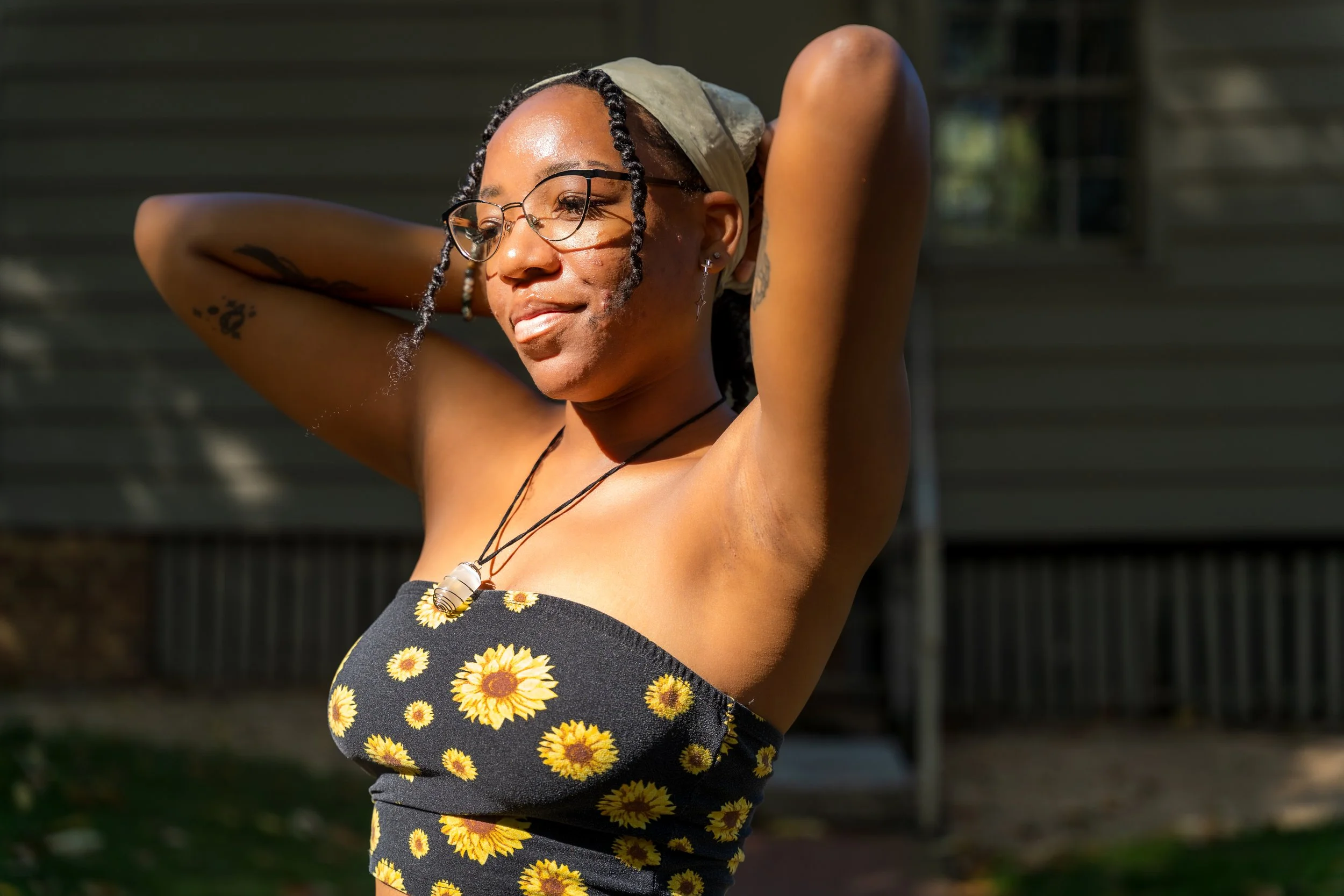
Have you ever seen a photo where someone with dark hair completely merges into a dark backdrop? That’s a failure of separation.
Hair Lights add a subtle sheen to the top of your head, keeping your hair distinct from the background.
Rim Lights trace a soft line of light along your shoulders and jawline.
These rim and accent lights lift you off the page, giving the entire image a polished, high-end feel.
4. Guiding Your Posture to Catch the Light

Great lighting is only half the equation—how you position yourself inside that light is what brings the shot to life.
You don't need to worry about awkward posing or knowing your "good side." Through simple, purposeful direction—turning your face slightly toward the key light, adjusting your chin, or angling your shoulders—we align your natural posture with the light patterns.
The Result: Real Connection & Impactful Visuals
When light shaping, direction, background separation, and posture work together, the result isn't just a technically correct photo—it's an image with depth, clarity, and presence.
You don't need to know the physics of light ratios or shadow falloff—that’s my job. Your only job is to show up and be yourself.
Ready to upgrade your headshots or personal brand visuals?
Let's create intentional portraits that truly reflect who you are. Start Your Journey Here